Agricultural machinery
Tractor planetary housing
The heavy housing is made of carbon steel, the long shaft of alloy steel, and friction welding joins the two. Its service life equals that of the forged part.
We have been designing and building friction welding machines since 1991, and since 1992 we have also been producing on our own machines.
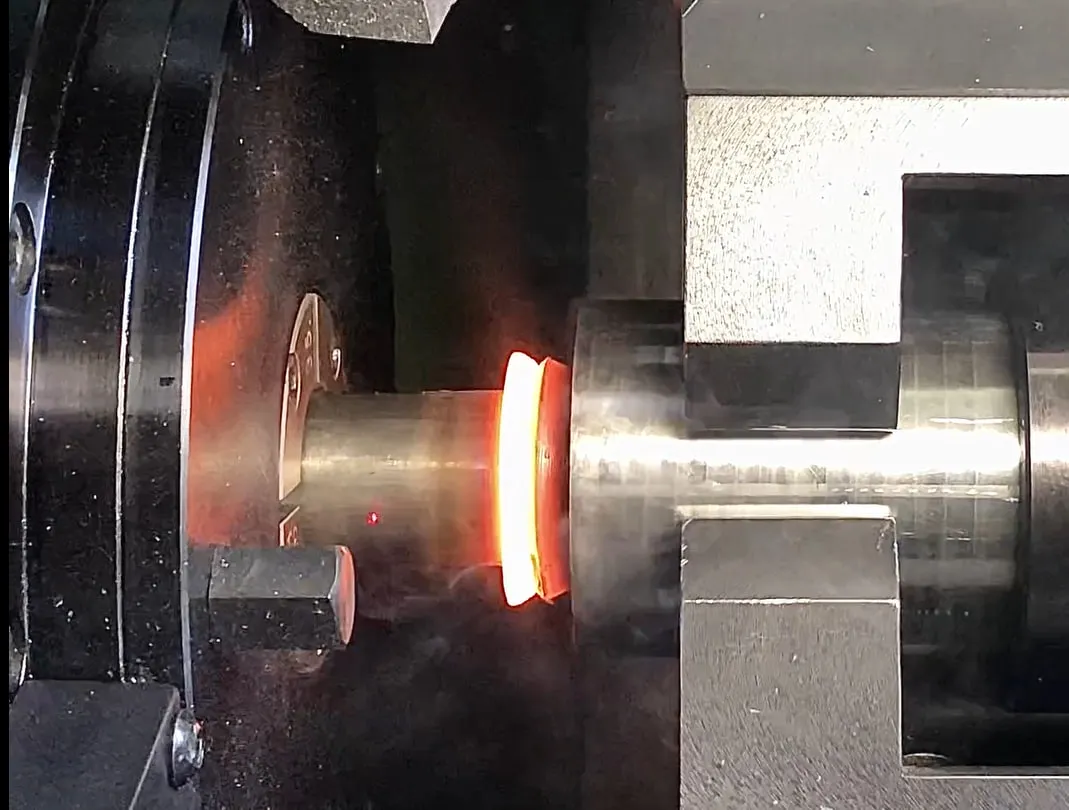
Friction welding is a type of pressure welding in which the two surfaces to be welded are rotated relative to each other and pressed together with the appropriate force.
On the contact surfaces, friction heats the metal and brings it into a plastic state; heat and pressure then create the cohesive bond at atomic level.
Combining metals Materials with different chemical compositions and mechanical properties can be used within a single part. Expensive materials can be limited to where the application requires them. For example, a heat-resistant valve head and a wear-resistant valve stem.
Joint quality A uniform, cohesive bond at atomic level, supervised by an automatic quality control system.
Concentricity Our machines weld within concentricity tolerances as tight as a tenth of a millimetre.
No filler material or shielding gas No shielding gas or filler material is needed, so the environmental impact is minimal.
The heavy housing is made of carbon steel, the long shaft of alloy steel, and friction welding joins the two. Its service life equals that of the forged part.
Instead of a cast or forged blank, it is assembled from three parts that can be quickly cut from stock.
The working part is high-speed steel (HSS), the shank carbon steel. The joint is precise and crack-free, and the edge life equals that of a one-piece tool.
A heat-resistant head and a wear-resistant stem in one part. The concentricity provided by friction welding is particularly important here.
Only the section exposed to corrosion is made of stainless steel, the rest of cheaper carbon steel, even with a different diameter.
Titanium and nickel-based alloys are difficult to join by conventional welding; friction welding joins them precisely and without contamination.
Hardened or chrome-plated working surface, softer steel rear end. The joint withstands alternating loads and replaces threaded and shrink-fit joints.
The pipe body and the forged, threaded tool joints are made separately and joined by friction welding. The long pipe body therefore does not have to be machined from a thick-walled blank.
Friction welding is also used in the space industry, railway vehicle manufacturing, construction, the defence industry, nuclear energy and general engineering.
Applications in detailWhere a dot appears at the intersection of the row and the column, the two materials can be friction welded to each other.
| Material | Aluminium and aluminium alloys | Cast iron (GJS, GJM) | High-speed steel (HSS) | Copper and copper alloys | Nickel and nickel alloys | Unalloyed steel (carbon steel) | Low-alloy steel | High-alloy steel | Titanium and titanium alloys |
|---|---|---|---|---|---|---|---|---|---|
| Aluminium and aluminium alloys | Aluminium and aluminium alloys – Aluminium and aluminium alloys: weldable | ||||||||
| Cast iron (GJS, GJM) | Cast iron (GJS, GJM) – Aluminium and aluminium alloys: weldable | Cast iron (GJS, GJM) – Cast iron (GJS, GJM): weldable | |||||||
| High-speed steel (HSS) | High-speed steel (HSS) – Aluminium and aluminium alloys: no data | High-speed steel (HSS) – Cast iron (GJS, GJM): no data | High-speed steel (HSS) – High-speed steel (HSS): no data | ||||||
| Copper and copper alloys | Copper and copper alloys – Aluminium and aluminium alloys: weldable | Copper and copper alloys – Cast iron (GJS, GJM): no data | Copper and copper alloys – High-speed steel (HSS): no data | Copper and copper alloys – Copper and copper alloys: weldable | |||||
| Nickel and nickel alloys | Nickel and nickel alloys – Aluminium and aluminium alloys: no data | Nickel and nickel alloys – Cast iron (GJS, GJM): no data | Nickel and nickel alloys – High-speed steel (HSS): no data | Nickel and nickel alloys – Copper and copper alloys: no data | Nickel and nickel alloys – Nickel and nickel alloys: weldable | ||||
| Unalloyed steel (carbon steel) | Unalloyed steel (carbon steel) – Aluminium and aluminium alloys: weldable | Unalloyed steel (carbon steel) – Cast iron (GJS, GJM): weldable | Unalloyed steel (carbon steel) – High-speed steel (HSS): weldable | Unalloyed steel (carbon steel) – Copper and copper alloys: weldable | Unalloyed steel (carbon steel) – Nickel and nickel alloys: weldable | Unalloyed steel (carbon steel) – Unalloyed steel (carbon steel): weldable | |||
| Low-alloy steel | Low-alloy steel – Aluminium and aluminium alloys: weldable | Low-alloy steel – Cast iron (GJS, GJM): weldable | Low-alloy steel – High-speed steel (HSS): weldable | Low-alloy steel – Copper and copper alloys: weldable | Low-alloy steel – Nickel and nickel alloys: weldable | Low-alloy steel – Unalloyed steel (carbon steel): weldable | Low-alloy steel – Low-alloy steel: weldable | ||
| High-alloy steel | High-alloy steel – Aluminium and aluminium alloys: weldable | High-alloy steel – Cast iron (GJS, GJM): weldable | High-alloy steel – High-speed steel (HSS): weldable | High-alloy steel – Copper and copper alloys: weldable | High-alloy steel – Nickel and nickel alloys: weldable | High-alloy steel – Unalloyed steel (carbon steel): weldable | High-alloy steel – Low-alloy steel: weldable | High-alloy steel – High-alloy steel: weldable | |
| Titanium and titanium alloys | Titanium and titanium alloys – Aluminium and aluminium alloys: weldable | Titanium and titanium alloys – Cast iron (GJS, GJM): no data | Titanium and titanium alloys – High-speed steel (HSS): no data | Titanium and titanium alloys – Copper and copper alloys: weldable | Titanium and titanium alloys – Nickel and nickel alloys: weldable | Titanium and titanium alloys – Unalloyed steel (carbon steel): weldable | Titanium and titanium alloys – Low-alloy steel: weldable | Titanium and titanium alloys – High-alloy steel: weldable | Titanium and titanium alloys – Titanium and titanium alloys: weldable |
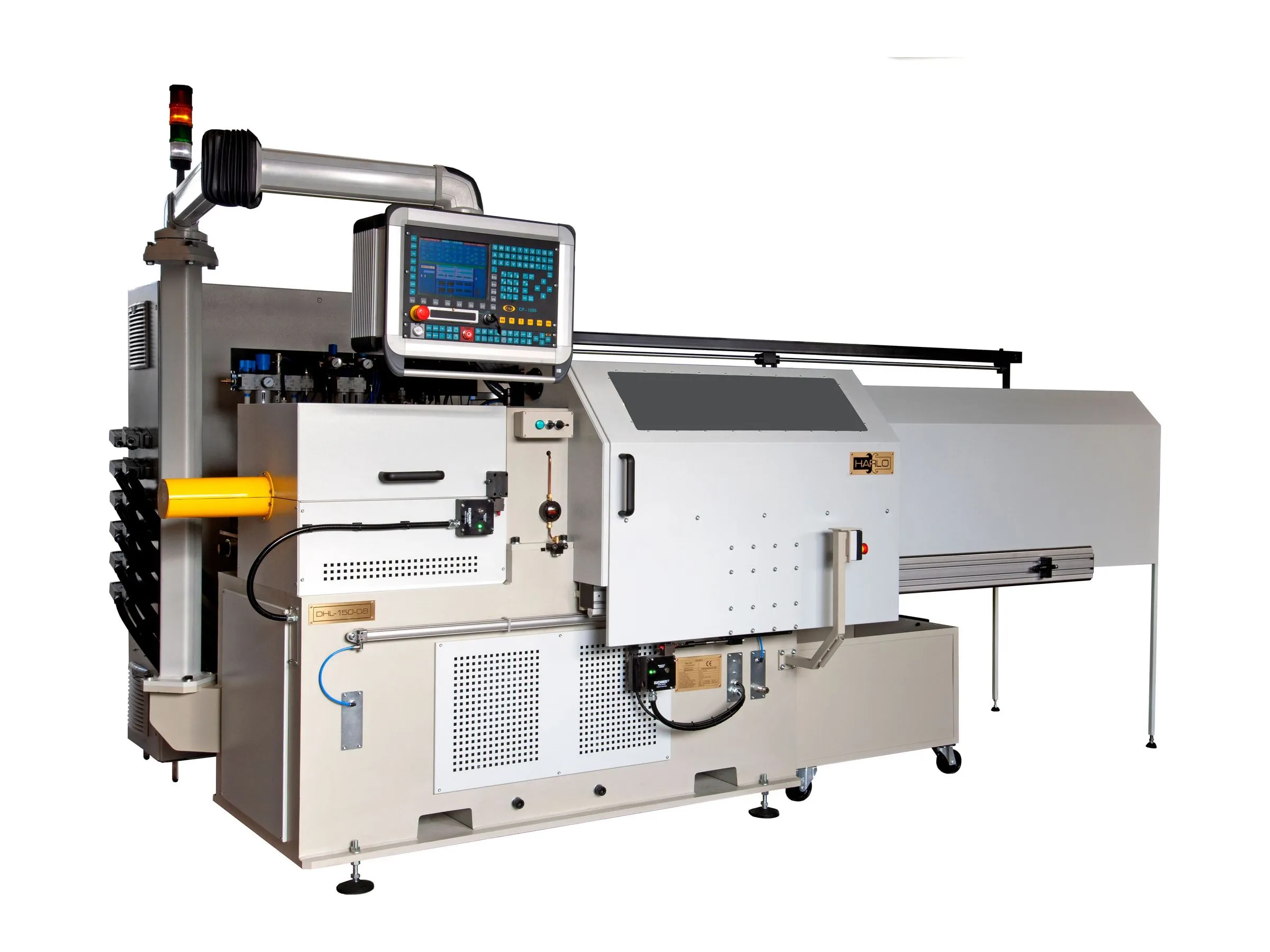
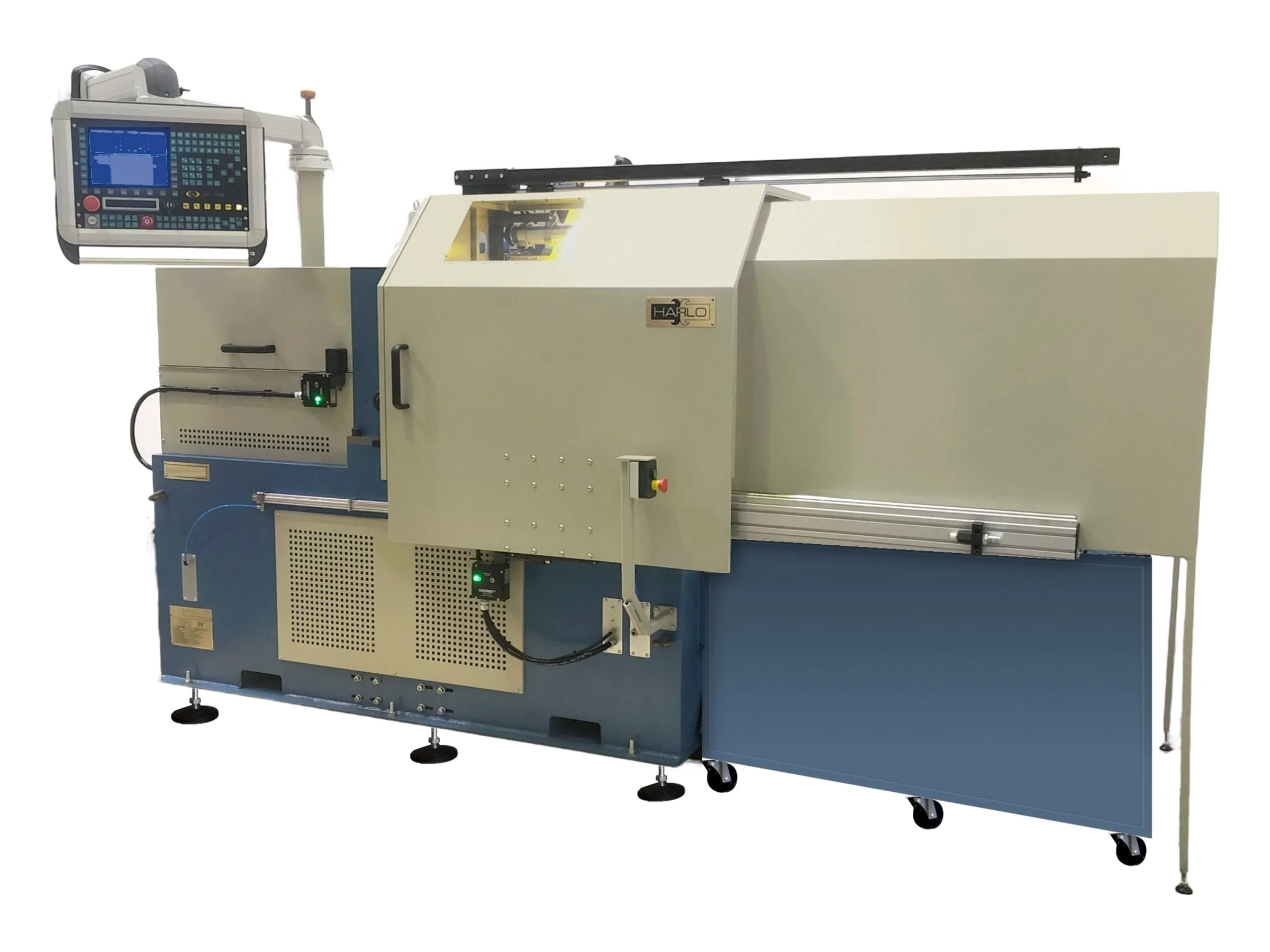
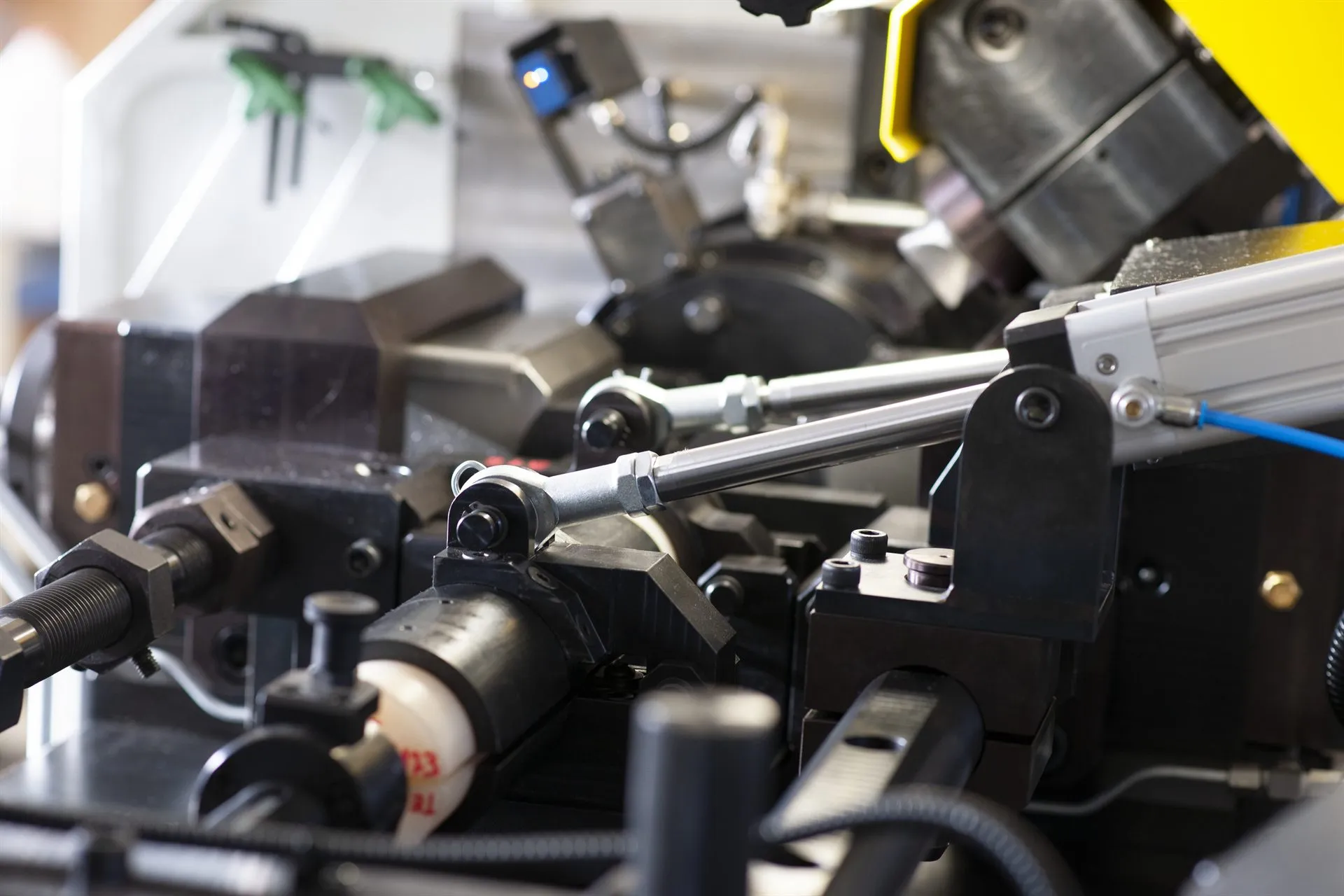
Our latest friction welding machines are the result of decades of continuous development. Every machine is optimised for individual requirements and for specific product and material types.
The machine removes the excess material formed during welding immediately, so subsequent machining is reduced or eliminated.
The integrated monitoring and closed-loop control system keeps the process parameters stable and traceable throughout the entire cycle.
At the end of welding, the relative angle of the workpieces can be set with an accuracy of ±0.5°.
Our machines integrate easily into robotic production processes.
We also design and build custom, automated solutions. Special-purpose friction welding machines
We carry out series friction welding on machines of our own design and manufacture. Our services range from process development and prototyping to pilot series and high-volume production.
We also carry out trial welding in our own facility, so new products can be introduced smoothly.
The welding process is developed from the drawing and the material combination.
We weld a sample part and set the parameters for it.
Before series production starts, the pilot series validates the process.
The series is produced with process monitoring and final inspection.
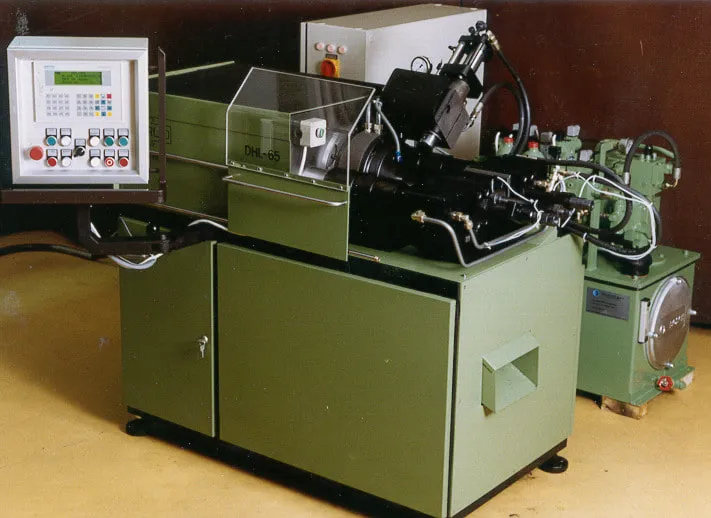
Over the past decades we have developed six machine types, from the DHL-65 to the DHL-500. Our machines operate worldwide, often in robotic, multi-shift production.